By: Selma Taapopi
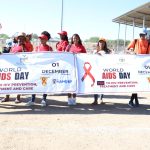
Speaking at the World AIDS Day commemoration in Otjiwarongo on Monday, Executive Director of the Namibia Network of AIDS Service Organisations, Sandie Tjaronda, said many African countries including Namibia are moving from donor-supported to domestically financed health systems.
He noted that although this shift signals progress, it also exposes underlying vulnerabilities and inequalities.
Tjaronda warned that a contracting donor landscape could undermine hard won gains unless governments and partners act decisively.
He stressed that community-led interventions are often the first to suffer when external funding declines.
United Nations Resident Coordinator, Hopolang Phororo, said the recent, significant reduction in global HIV funding has disrupted essential services.
According to Phororo, this funding shortfall has heightened risks for vulnerable groups, intensified social inequalities, and weakened community-driven services that are crucial for reaching populations most in need.
Phororo added that in 2024, Namibia recorded an estimated 220 000 people living with HIV and 4 500 new infections, with young people aged 15 to 24 accounting for nearly a quarter of new cases.